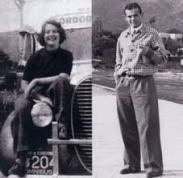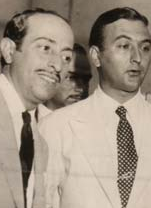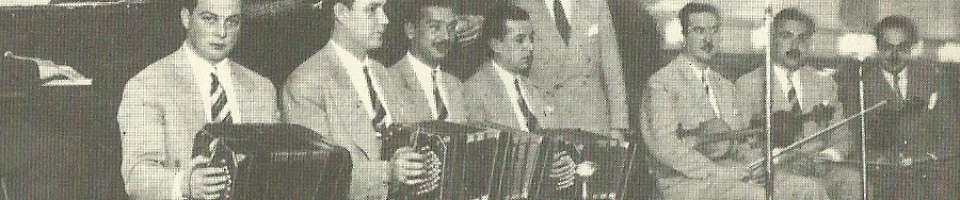
Disillusionment (Desencanto) [Orquesta Discépolo]

discepolo
Tango music is definitely not for the faint at heart, and this title is just another example of how dramatic many songs are. If you study the lyrics regularly and educate yourself about tango topics, you will inevitably start to make a lot of connections (for instance, in word choice), which make all the hard work quite a rewarding experience – your newly acquired knowledge will probably make your dancing, at least for yourself, much more intense and meaningful.

If I had to choose a single lyricist who can best summarize the darker side of tango poetry in a few lines, I would definitely say Discépolo. One of his favourite subjects was probably a combination of disillusion and betrayal. Songs like Soy un Arlequin, Infamia (both coming soon) and Confesión show a lot of particularly strong feelings, that at least in my case, have an uniquely devastating effect.

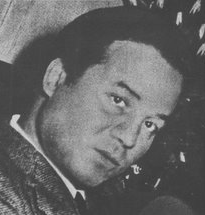
The strong content of the following song should, therefore, come as no surprise. Listen to Discépolo’s lover, the actress Tania, and to the orchestra that bore his name. The first version below (with limited lyrics) is also simply great in a musical sense.
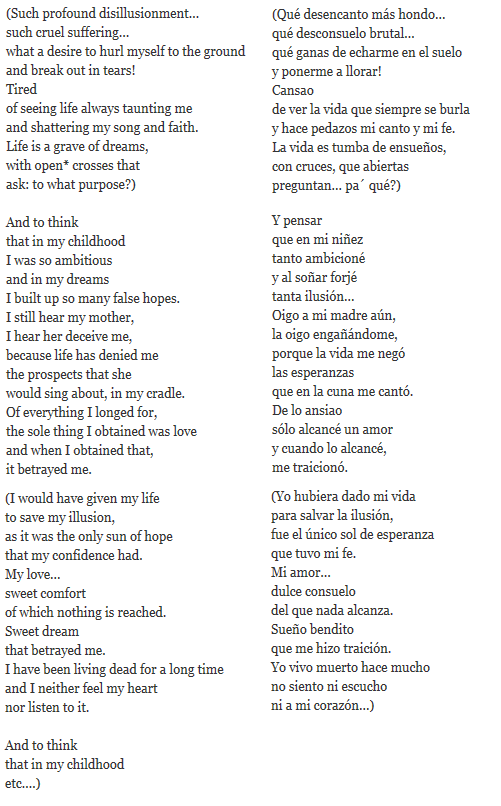
desencanto

*I wonder how a cross could be open. In Marino’s version, the word is replaced by ‘a veces’, sometimes. The original words are, perhaps, a religious reference, which is quite common in Discépolo. I am not sure, though.
Futile (Inútil) [Maderna]

Osmar Maderna just might be the best musician you have never heard of. Well, I am actually sure you have heard his stunning piano playing a lot, because this man is one of the key reasons why the unforgettable recordings of Miguel Caló in the early fourties are really that unforgettable. Caló’s songs from that period always simply force me to dance, to move along the music, while I am constantly adoring omnipresent musical details.

However, nowadays, nobody seems to care about Maderna’s own orchestra… which is a shame, because his music is not only full of great ideas, but it is also true to the smooth, warm style of Miguel Caló’s best recordings. In fact, in my view, all the musicians who made the Orchestra of the Stars so good and then, quit, kept producing relatively good music. Yes, that means that Domingo Federico, Enrique Francini and Armando Pontier will also get some fully deserved attention soon.

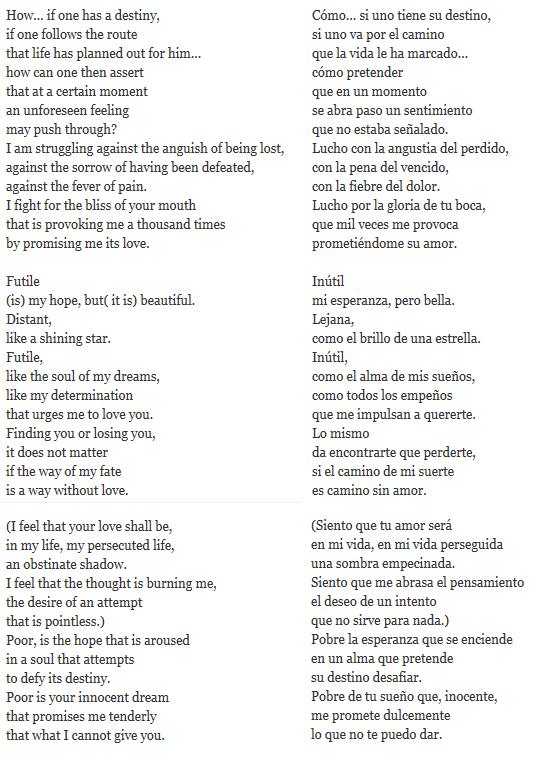
Immerse yourself in this rather complex poem about fate, tragic love, powerlessness and desperation.

inutil

Shut up, bandoneón (Calla, bandoneón) [Tanturi]

enrique campos

For me, this song is simply the best Tanturi-Campos ever recorded. My list of favourites is long and they are all vehemently competing for the crown, but in the end, Calla bandoneón always prevails.

Until Campos starts singing, you might as well pay special attention to the game of questions/statements and answers that the instruments are involved in. This is, naturally, a normal thing in tango, but in this particular song the conversational structure seems clearer to me than usual. First, various instruments respond to the bandoneón, and then, they switch roles, but anyway, you could interpret this conversation in many different ways.

And as soon as you understand the meaning of this song, see if you can recognise, like me, how the bandoneón is trying to apologise for things, justifying its melancholy, bringing up counterarguments…. of course, everybody will hear different things, but there is certainly a dialogue going on.

You can also listen to versions by José García and Juan D’Arienzo, the latter one contains the complete lyrics.

Juan D’Arienzo-Armando Laborde

calla bandoneon
*In the José García version, ‘arrived’ is replaced by ‘could be heard’.

En carne propia [Troilo]

alberto marino

”Wait… Troilo-Marino again?!  This guy is sooo repetitive!”

I know I am somewhat unfair, but I cannot get enough of this dramatic combination. In addition, En carne propia is probably one of the songs that many international dancers will dance to and leave the floor saying ”Now, that last song was really romantic, wasn’t it?”……..

There are a lot of tango lyrics about broken hearts, longing and grief, and in relation to all of that, remorse and self-reflection. The following tango, however, is about a situation that comes from the same source, but this time the message is full of anger, grudge and hatred, like Te Odio (translation coming soon).

The title is very beautiful, but at the same time also an expression that cannot be translated so easily. Literally, it would mean ‘In own flesh’. So, as far as this song is concerned, if you feel something en carne propia, it is like a strong feeling that comes back at you in revenge and subsequently crushes you. Just listen to this tango and you will understand what the title means.

en carne propia

*This metaphor sounds a bit weird to me, but I am sure you get the meaning anyway.

Shoeshine boy (Se lustra, señor)

ImageI have been translating a lot of lyrics lately that are more than anything about love and poetic misery related to it. However, another common theme is the arrabal, the (poor) neighbourhood of origin. We can recognize a lot of mixed feelings about love and women in tango, and that is also true for the arrabal.

The following song tells us about the fate of children from poor families, most likely immigrant families. Many barrios (neighbourhoods) of Buenos Aires, like La Boca, Barracas, Nueva Pompeya and San Telmo used to be full of poor European immigrants who struggled to survive in a harsh environment. If you want to understand the essence of Argentine culture, small stories of hope and tragedy in songs like Se lustra, señor are key.

In case you do not get the ending of this story: it is likely that the kid is suffering from tubercolosis, a common problem at the time and quite easy to catch for children who were working on the streets.

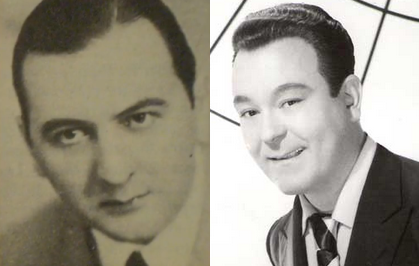
Let us listen to two famous singers, Ángel Vargas and Alberto Castillo.


Shoeshine boy (Se lustra, señor)

The boy with his old clothes, with a skin damaged by the sun…
life has treated him with all its toughness.
On the same corner, he always shouts:
“Sir, I shine your shoes better than those guys in the salon*!”
I know this brave** boy’s story.
One day, his father did not return home
and he, without a word, made his own box
and ever since, there has never been a lack of food (lit: bread).

“Sir, let me shine your shoes!”
“Shoe shine, sir?”
While he is looking for hope,
life amasses trouble and pain.
Each and every day, even when
the sun burns us
or when the winter cold
makes our hearts freeze.

And one of these mornings,
the wind of the arrabal
left a strange silence
over there, on the threshold.
For a few days, we have not heard his call:
“Sir, I shine your shoes better than those guys in the salon!”
Yesterday we went to see him, and I just have got to tell you this…
He looks at us, sits up and starts talking:
“Mommy, come over here quickly
and bring me my shoe shine box,
because sir, I shine your shoes better than those guys in the salon…”

And like that, just like in this story that I have just told you,
the humble soul of the arrabal accumulates itself.

*This probably does not refer to salon as in milonga. Here, it is most likely some kind of store where locals would go to have their shoes polished.
**The literal translation would be ´I know of his value´. But valor can also mean courage, and is this context the boy is courageous enough to help his family survive against all odds. So, his courage can be his personal value, too.