I, too, dreamt (Yo también soñé) [Canaro]

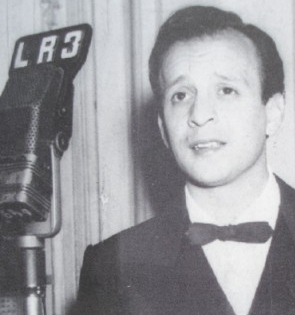
maida y charlo

Is there anyone here who doesn’t like Roberto Maida’s voice? Every time I listen to whatever song Francisco Canaro has created together with his singer Maida, I am amazed by the quality of this combination…. and after trying to study the lyrics in more detail, I also conclude that they dealt with a lot of particularly beautiful tango poetry, too.

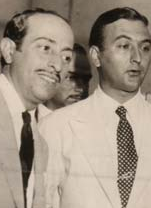
I invite you to listen to a very beautiful and danceable – I love walking to this song at home – version of the following song by Roberto Maida, a rather sad song, with lyrics that are stuck in my head and probably won’t get out anytime soon. You can also listen to a different version by a fellow named Charlo with full lyrics (translated below, too) that you can’t really dance too. It’s a scene from a movie and I always love watching the rather rare videos of tango singers. Charlo was one of the now kind of forgotten but still interesting Guardia Vieja singers, like Carlos Gardel, Agustin Magaldi and Ignacio Corsini.


I, too, have been dreaming
tales of illusion
since my childhood.
And it was a blue dream*
that deceived me
in my youth.
I dreamt about love,
I felt the warmth of
faithful affection.
Madly, I wasted
the treasures I forged
and in the midst of my sleep,
I was happy in the warmth
of those caresses that I
later would not know.

(The more tender
the love in a dream,
the more bitter
the awakening becomes.)
An iron hand brings
us back to reality
and our dreams change into
misery and wickedness.
I would like to dream,
sleep once and for all
and never wake up again.

(After losing my hope and
faith, I saw her appear.
Pretty as a picture**
she looked at me while
passing through my solitude.
She came closer to me and
I heard her voice speaking of love.
My hope was born again
and now that I am happy
I am afraid of dreaming,
because if this were a dream,
I wouldn’t be able to live any longer.)

*In case you look up what a blue dream means, you probably learn something more about marihuana. The actual intended meaning seems to be a bit archaic nowadays.

** The original words would literally mean ‘beautiful like a sun’, which sounds typically Spanish to me. Therefore, I converted this into a bit more acceptable English expression that, ultimately, has the same meaning.
Forgotten things (Cosas olvidadas)

roberto rufinoEven after having heard many of his songs a hundred of thousand times I am still completely amazed by Carlos di Sarli. His elegant, emotional music and I shall be passionate partners till death do us part. There are many different Di Sarlis and I had to choose one, so let us listen to a bit of Di Sarli-Rufino.

Forgotten things (Cosas olvidadas)

After a long, long time
only now I talk to you again.
What a sensation I get from listening to you,
like as if it were back then!
You see…. I am much older now,
and you too, than in those days when
you loved me so much… so much,
and now nothing remains, everything is gone.

These are forgotten things,
these old love affairs,
and when recalling better times
our glance becomes clouded.
These are forgotten things,
that return faded and
in the solitude of our lives,
open wounds to the heart.

(There is an accent of sorrow
and melancholy in your voice
and in that plea for help my soul
does its best not to cry.
It’s just that we have done ourselves harm
by reviving those dead times
and the heart opened its gates
for the gloom of remembering.)

Guys, the ronda is starting!

Image
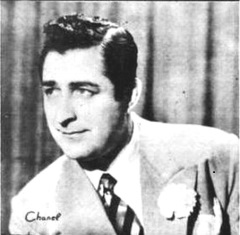
After quite a few sad songs it’s time to highlight a different type of tangos, namely those that tell us about dancing and personify the music. I don’t hear a lot of early Pugliese with Chanel in milongas, which is a shame, because I think they were a great combination and I believe Pugliese was still focusing on creating something that was actually meant for dancing. That is why I invite you to listen to one of their songs. The Tanturi/Campos version is also quite nice: the choice is completely up to you.


Guys, the ronda is starting! (Muchachos comienza la ronda)

Guys, the ronda* is starting, (the ronda)
that the tango is inviting to form.
Who, when hearing the beginning of such
a splendid sound, wouldn’t go dance?
And like that entangle one’s emotion
in this song that penetrates our souls.
Guys, the ronda is starting,
so make sure you enter the salon.

Don’t miss a single beat of this tango
that is abducting (us) rebelliously and sweetly.
Between turns and flirtatious, courteous remarks
let us imagine ourselves living back then,
those happy days of the grey chambergo**
the garrulous piropo***,
and the streetlight (‘’farol’’) of the arrabal****.
Don’t miss a single beat of this tango,
dancing is such fun when you hear it!

(Chanel: )
those happy days of the grey hat,
the garrulous piropo,
and the streetlight (‘’farol’’) of the arrabal.
Don’t miss a single beat of this tango….
Dancing is such fun when you hear it!

(Campos: )
And like that entangle one’s emotion
in this song that penetrates our souls.
Guys, the ronda is starting,
so make sure you enter the salon.

[Hearing this sound, so typical of Buenos Aires,
my heart gets revived,
and while I am listening to this tango
I am forgetting all my pain.
This cordial little music – second to none –
penetrates our souls.
Guys, the ronda is starting,
so make sure you enter the salon.]

*The ronda is the circle tango dancers form on the dance floor.

**a chambergo is a typical gaucho hat. As you may notice, Campos includes this word from the original lyrics, but Chanel only sings ‘’grey hat’’.

*** A piropo is a flirtatious compliment that men often give to women between dances in BA (I believe the song is referring to this behaviour), and it’s also the Argentine word for whatever flirtation.

****The arrabal is often referred to in tango as a poor neighbourhood where one grew up.

Tell me, my love… (Dime, mi amor)

hector maure

I am not afraid to admit that I have a weakness for Hector Mauré. Whenever, for a heretical reason, I haven’t been able to listen to tango for a few days, the first gentle reminder is a subtle, involuntary repetition, inside my brain, of the words ”Allá, junto a la ribera, un tano feliz vivía….”.

Hector Mauré was the singer who, perhaps, forced Juan D’Arienzo to adapt to a more lyrical style during a few years. The song that you are about to hear is still relatively up-beat compared to other Mauré songs, but still much more sensitive than your regular D’Arienzo. However, as a fanatical D’Arienzologist, I feel morally obliged to present a more… noisy counterweight from the same year (1941) soon.

Fellow worshippers of Hector Mauré ought not to despair, though, because my blog will definitely provide you with much more of this in the future.

Tell me, my love… (Dime, mi amor)

On the sleepy beat of our tango,
with my arm circling around your waist,
(I am) whispering a thousand phrases of fondness,
descrying a thousand heavens of good fortune.
I would like to know if there is,
inside your chest, still hope for me,
if my absence and that distance haven’t erased
the love that I, in your eyes, have seen.  

Tell me, my love,
tell me, my love,
if you still love me,
if the absence has not killed your affection,
if today I can, like
back then, believe.
Tell me, my love,
tell me, my love,
if you still prefer my heart
that I now put in my sad song.

(repeat) I would like to know if there is,
inside your chest, still hope for me,
if my absence and that distance haven’t erased
the love that I, in your eyes, have seen.  


You have to live it, pal

Image

Exactly 113 years ago, Angel D’Agostino was born and on his birthday I have decided to translate one of my favourite songs by his orchestra. I am dedicating this post to a certain lady in Buenos Aires who may just be Angel’s most loyal admirer in the world.

Update: Some people from certain countries cannot access this video. You can also go to Grooveshark.

You have to live it, pal (singer: Angel Vargas, lyrics: Héctor Marcó)

You, disappointed in love, sentence
yourself to a prison cell of revulsion.
Because you got a sunstroke yesterday,
you are today shivering with cold.
You, who frightens me into laughter, almost cry
hard-heartedly and with resentment.
Raise a golden glass of champagne
and you will forget about it, like I did.

Make the most of this life, you first have to
live it, in order to find the right key to open it.
Today you have a beating heart,
but tomorrow, who knows?

You have to live it, pal! You gotta live it!
To taste its flavor you need to
close your heart and put your soul to sleep,
and you’ll see that the world is already better.

(Don’t collapse under your grief, don’t let yourself be
intimidated because a mouth lies to you,
as with that kiss of lies you can gain
another one, a burning kiss.
Move yourself deeply by listening to a bandoneón,
overturn your longing with a tango,
and you shall see that between laughter and pain
one drinks the same champagne.)